Biography
1960’s
First exhibitions at provincial and national art shows. Craft Prize at Provincial Arts Exhibition. Began university teaching career in fine arts.
1970’s
Established reputation through monumental tapestries featuring cranes, landscapes, and natural forms woven in thread. 1st Academy of Art Prize. Craft Prize Recognition. Signature works defined his place in Korean fiber art.
1980’s
Expanded practice into printmaking, including woodblock and screenprint. Began synthesizing fiber and print into a unified artistic language. Roses, botanical forms, and bold chromatic studies emerged.
1990’s
International exhibitions, including the Biennale de Paris. Work exhibited across Korea, Asia, and the United States. Fiber and print synthesis reached full maturity.
2000’s +
Retrospective Monograph Published
Song BurnSoo
Song BurnSoo (송번수) (b. 1943, Korea) is a pioneering Korean artist whose career across fiber art, tapestry, printmaking, and spatial design spans more than six decades.
A professor at Hongik University's College of Fine Arts for nearly three decades and founder of Moon Art Grounds Museum (formerly Museum of Maga) in Yongin, Song has shaped both the practice and the institutional landscape of Korean contemporary art.
His work has been exhibited at the National Museum of Modern and Contemporary Art (MMCA) in Korea, the Solomon R. Guggenheim Museum in New York, the Hammer Museum in Los Angeles, the Museum of Fine Arts Budapest, and venues across Europe and Asia. He has received the Order of National Service Merit from the Korean government, the Grand Prix at the Seoul International Print Biennale, and the First Golden Fleece Prize in Budapest.
His practice proposes that making is the most fundamental form of understanding, that the hand's encounter with material produces a knowledge that cannot be arrived at by any other means.
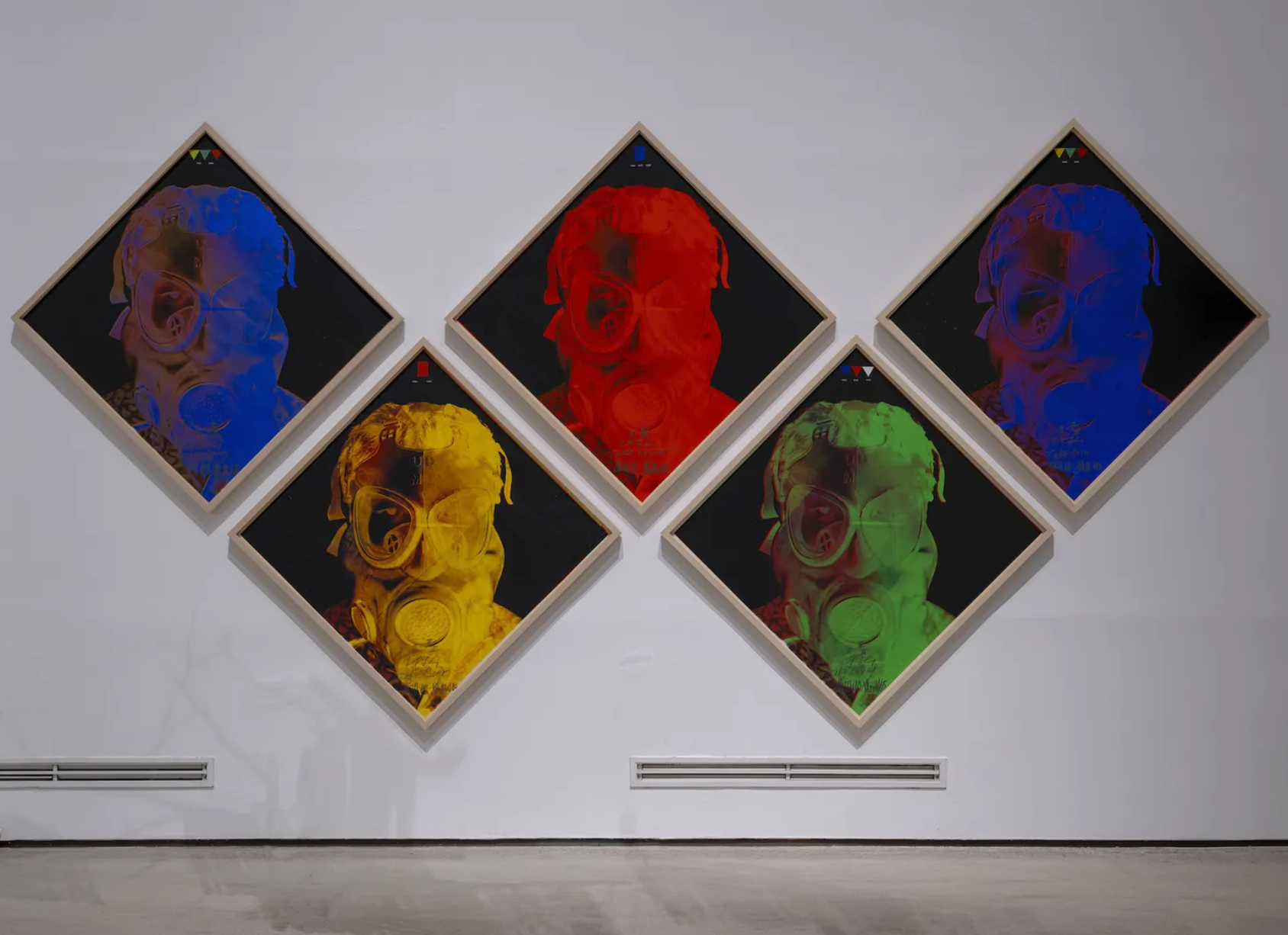
In 2023, Song Burnsoo's work was presented as part of Only the Young: Experimental Art in Korea, 1960s–1970s, a landmark exhibition organized by the National Museum of Modern and Contemporary Art (MMCA) in Seoul. The exhibition traveled to the Solomon R. Guggenheim Museum in New York and the Hammer Museum in Los Angeles, introducing a global audience to the radical energy and ambition of Korea's postwar avant-garde. Song's vivid screenprint installations, with their bold chromatic intensity and unflinching imagery, stood at the center of this reappraisal, confirming his place among the most daring and original voices of his generation.


Career & Contributions
Song earned his BFA (1965) and MFA (1974) from Hongik University in Seoul, one of Korea's most distinguished art institutions. His first solo exhibition was held at Daejeon Cultural Center in 1960, and by the early 1970s he was exhibiting at Gallery Hyundai and international venues including the Stockholm Cultural Center and the Goethe Institute in Seoul.
His early work centered on tapestry, monumental woven works featuring cranes, Korean landscapes, and natural forms that function as structural investigations. The repetition of petals becomes a study in chromatic variation; a crane in flight becomes a meditation on tension and release within woven thread. These works are technically masterful and emotionally resonant, grounded in Korean visual tradition while speaking in unmistakably contemporary terms.
In the 1980s, Song expanded his practice into printmaking, particularly woodblock and screenprint, and was appointed Professor at Hongik University's College of Fine Arts, a position he held from 1980 to 2008. This dual commitment to making and teaching defined his professional life for nearly three decades.
By the 1990s, the synthesis of fiber and print had become a defining signature. Roses, botanical forms, and bold chromatic compositions from this period reveal an artist for whom all materials are ultimately one material. His work circulated internationally, with exhibitions in Paris, Budapest, Osaka, Tokyo, and across Korea.
In 1998, Song founded the Museum of Maga in Yongin (now Moon Art Grounds), establishing an institutional home for contemporary art that continues to operate under his family's stewardship today.
His later abstract works push further, toward cosmological imagery, deep chromatic fields, and explosive gestural compositions that simultaneously suggest infinite space and the intimate surface of a single thread. A universe and a weaving, held in the same frame.
In 2017, the National Museum of Modern and Contemporary Art (MMCA) in Gwacheon presented Pantomime of 50 Years, a major solo retrospective surveying five decades of Song's practice. In 2023, his work was included in Only the Young: Experimental Art in Korea, 1960s to 1970s, a landmark exhibition that traveled from MMCA Seoul to the Solomon R. Guggenheim Museum in New York and the Hammer Museum in Los Angeles. He continues to exhibit, with his most recent solo show, Epic of the Night Sky, held at SongArt Gallery in Seoul in 2024.
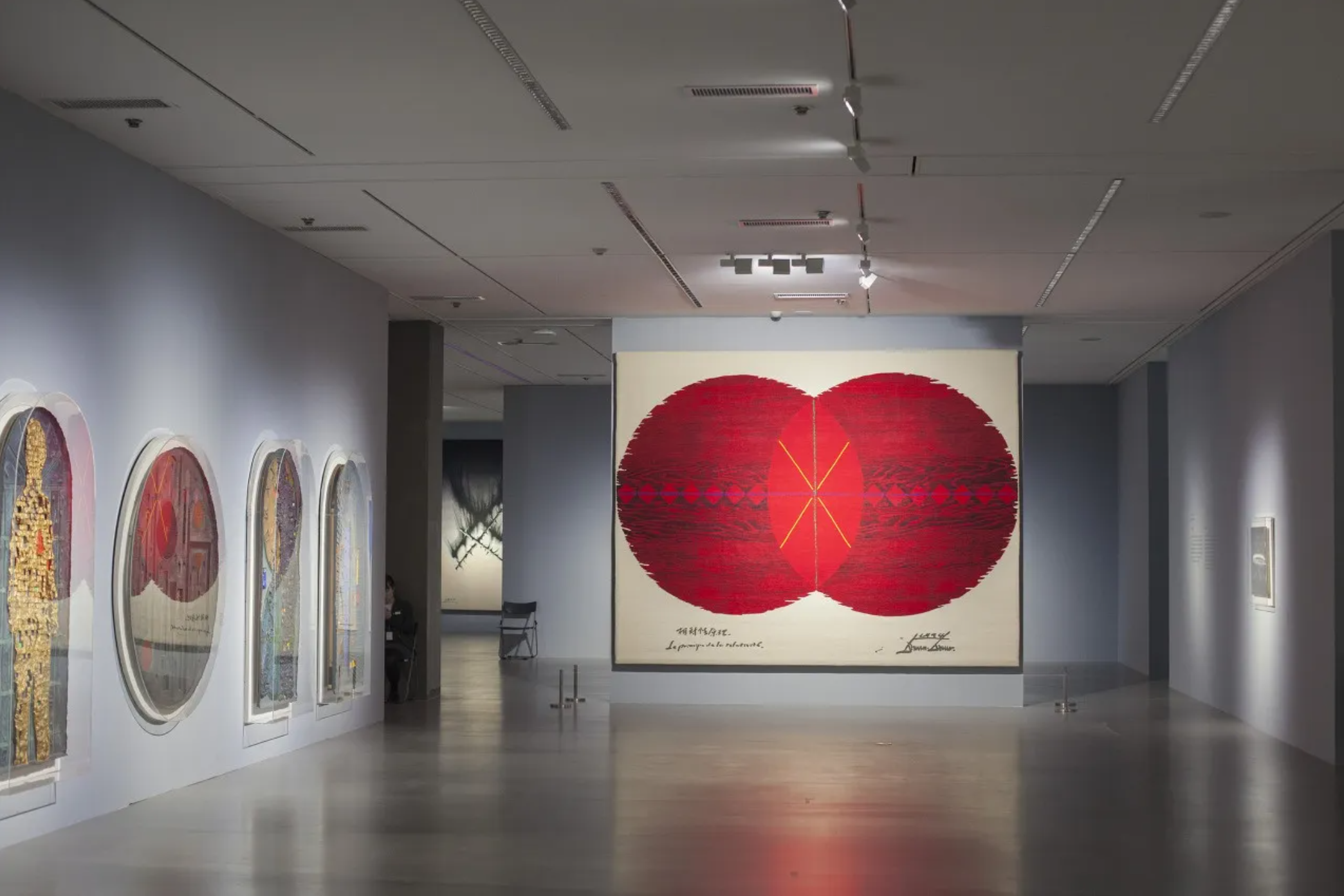
In 2017, the National Museum of Modern and Contemporary Art (MMCA) in Gwacheon presented Pantomime of 50 Years, a landmark solo retrospective surveying five decades of Song Burnsoo's practice. The exhibition brought together monumental tapestries, fiber works, prints, and mixed media installations, offering the most comprehensive institutional survey of Song's career to date. Held at Korea's foremost museum of contemporary art, the retrospective confirmed Song's standing as one of the most significant and prolific artists in the history of Korean contemporary art.

Awards & Recognition
Song has received sustained recognition at both national and international levels.
In 1972, he was awarded the Grand Prix at the 2nd Seoul International Print Biennale.
In 2000, the Korean government decorated him with the Order of National Service Merit.
In 2001, he received the First Golden Fleece Prize in Budapest on the occasion of the 1000th anniversary of the Hungarian State.
In 2002, he received the Grand Prize at the Lausanne-to-Beijing International Tapestry Art Biennale in China.
Family & Legacy
Song Burnsoo's legacy extends beyond his own practice. As a professor at Hongik University for 28 years, he shaped generations of Korean artists. As founder and chief of Moon Art Grounds (formerly Museum of Maga), he built an institution dedicated to the presentation and preservation of contemporary art, now continued by his family.
His work lives in the collections and exhibition histories of major institutions worldwide. His commitment to the hand, to the material, and to the belief that art and life are a single, continuous act of making remains as urgent and relevant today as it was six decades ago.
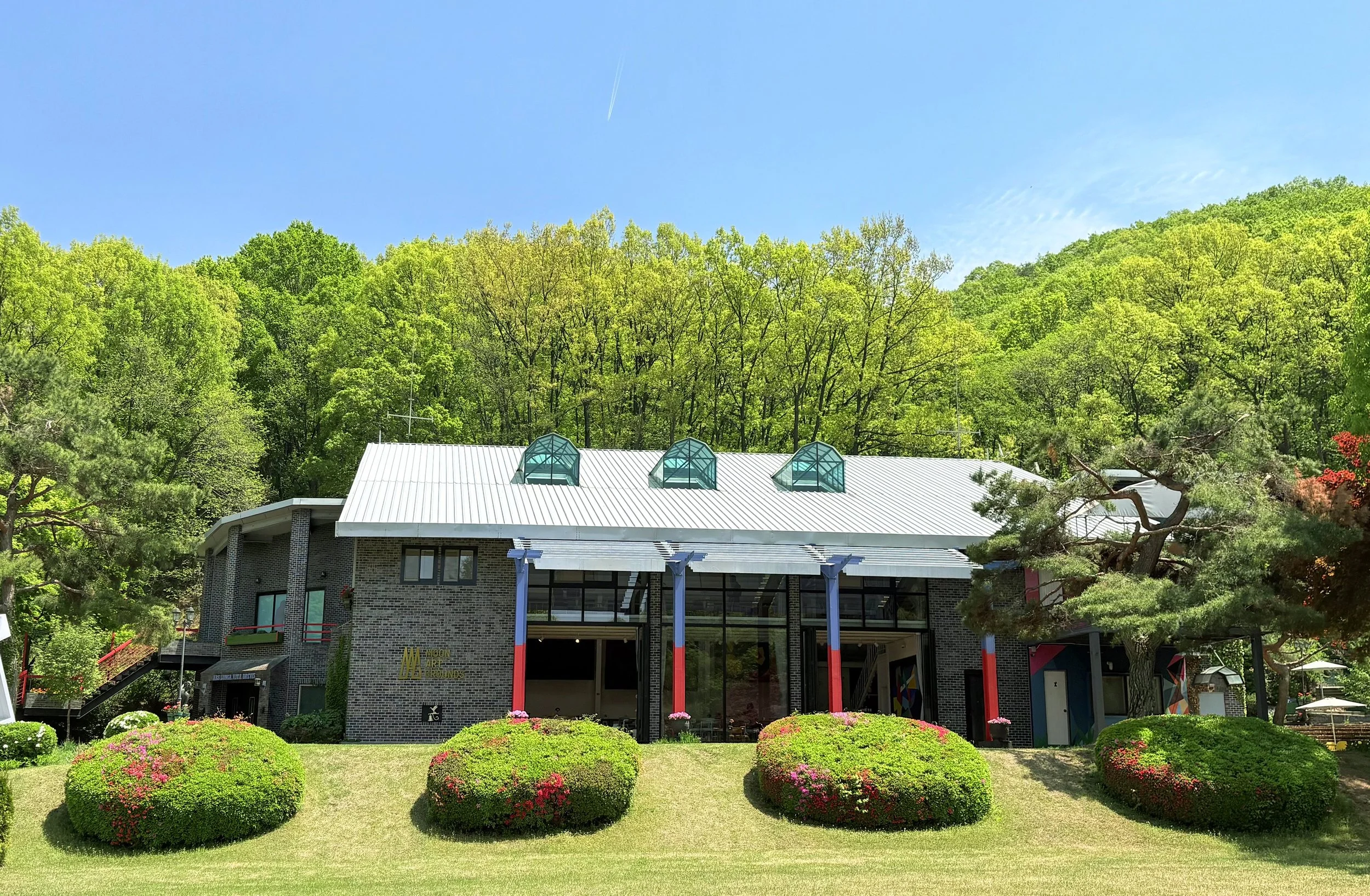
Moon Art Grounds is rooted in the legacy of BurnSoo Song, whose lifelong exploration of material, form, and meaning continues to shape the identity of the space. Set within a quiet natural landscape in Yongin, the building stands not only as a venue, but as an extension of the artist’s vision, where art, environment, and architecture exist in dialogue.
Open six days a week, the museum presents a living program centered on Song’s work while also introducing a broader conversation with artists and practices from around the world. His tapestries, prints, and abstract compositions are shown alongside rotating exhibitions that expand the scope of the space beyond a single voice, creating a balance between legacy and contemporary exchange.